
Across the country, the need for long-term services and supports (LTSS) is growing while direct care workforce shortages, state budget constraints and system complexities challenge person-centered, sustainable care delivery. As more individuals seek to age in place or live independently in their communities, states and managed care organizations are being asked to do more with fewer resources, without compromising quality, safety or choice.1
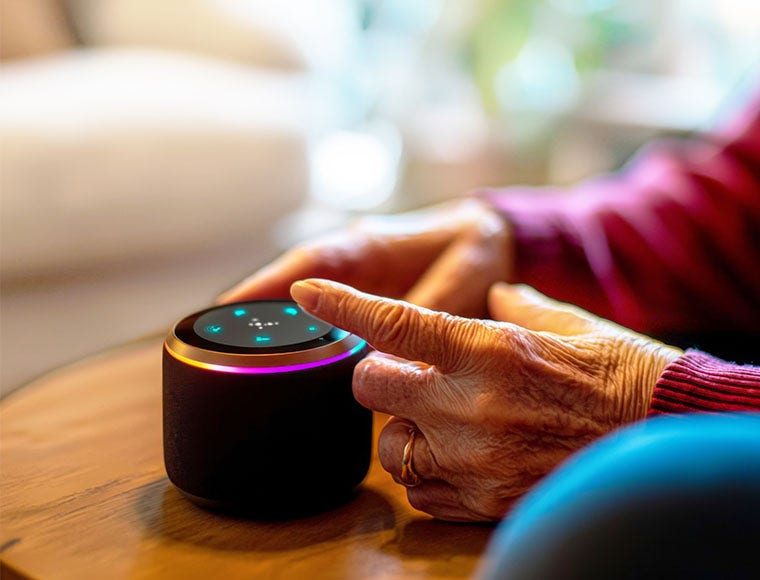
Enabling technologies (ET) are increasingly seen as part of the solution. ET includes devices and technologies that help people with disabilities and older adults meet their needs in their own homes. Tools such as remote supports, wearable health devices and assistive technologies can help individuals maintain independence, support family caregivers and extend the reach of an already stretched direct care workforce.
Yet despite rapid innovation, ET adoption has been uneven. Policy barriers, fragmented guidance and misaligned payment models have made it difficult to scale the most effective technologies in a consistent way across managed long-term services and supports (MLTSS) programs.
Advancing policy and practice through collaboration
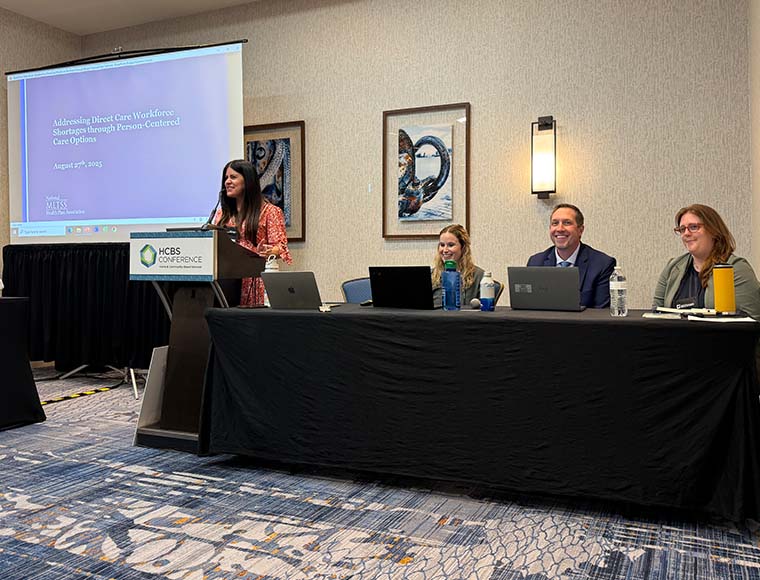
In 2024, UnitedHealthcare Community & State joined the National MLTSS Health Plan Association (“MTLSS Association”) to collaborate with other Medicaid managed care organizations on improving how LTSS is delivered nationwide. Together, participating plans are working to advance policy recommendations and best practices that expand access to home- and community-based services (HCBS), support community living and improve outcomes for the members they serve.
Throughout 2025, the MLTSS Association brought together a workgroup of health plan leaders and technology collaborators to examine how ET can be more effectively integrated into MLTSS programs. The group explored the rapid evolution of these tools, particularly during the COVID-19 public health emergency, when states, plans and providers needed to move quickly to deploy technology to meet urgent medical and social needs.
As the sector moves beyond the public health emergency, workgroup participants agreed that sustaining the most beneficial technologies will require greater alignment across policy, operations, data and payment. Without clear guidance and consistent evaluation criteria, many plans and providers continue to face administrative hurdles that slow adoption and limit access for members who could benefit most.
Identifying barriers and pathways forward
Insights from this work informed the recently released whitepaper, “Unlocking the value of enabling technology in managed LTSS.” Developed in collaboration with UnitedHealthcare Community & State and other MLTSS Association members, the paper identifies key barriers to broader adoption of ET across MLTSS programs, along with practical opportunities to address them.
The recommendations outline specific roles for federal policymakers, state agencies, managed care organizations, service providers and technology vendors. They also emphasize the importance of person-centered approaches that give members greater voice in how they are supported and how technology fits into their daily lives.
In addition to policy and programmatic recommendations, the whitepaper highlights early examples of how managed care plans’ investments in ET are already contributing to improved outcomes, greater independence and enhanced member experience. A multi-state landscape assessment further illustrates how current policies, benefits and funding structures vary across Medicaid-funded HCBS programs, highlighting the need for clearer pathways to scale what works.
As demand for LTSS continues to grow, ET will play an increasingly important role in strengthening the MLTSS system. Through work with the MLTSS Association and other collaborators, UnitedHealthcare Community & State is committed to helping advance thoughtful, practical solutions that support members, caregivers and providers alike.
To learn more about the findings and recommendations, read the full whitepaper below.
Enjoy this article? Get future Community & State insights delivered right to your inbox.