
Safe, stable housing is imperative for positive health outcomes, particularly for older adults living on fixed incomes. Yet across North Carolina, high housing costs and limited availability of affordable senior housing continue to strain individuals and communities alike.1,2 When housing becomes unaffordable or unstable, seniors are more likely to delay medical care, experience chronic stress and face preventable declines in physical and mental health.
These challenges are especially pronounced in western North Carolina. Even before Hurricane Helene devastated Asheville and surrounding communities in September 2024, the region grappled with a housing affordability crisis.3 Nearly 30 percent of adults age 65 and older in North Carolina spend more than 30% of their income on housing, placing the state among the highest nationally for senior housing cost burden.4 Research consistently shows that housing instability is closely linked to poorer health outcomes, particularly when individuals are forced to make trade-offs between housing, food and medical care.5
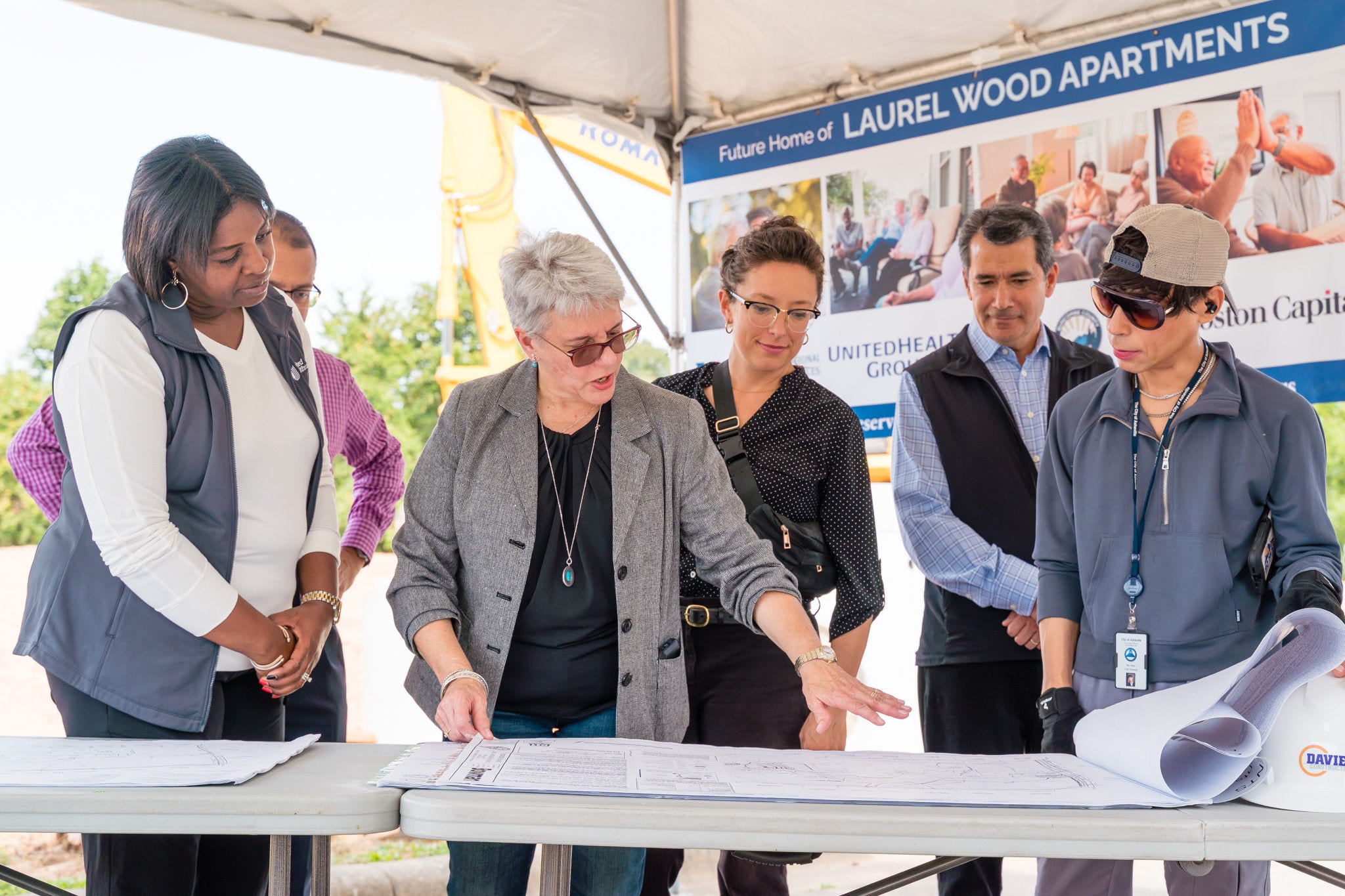
One year after Hurricane Helene intensified housing shortages and displacement throughout Asheville, the need for resilient, affordable housing solutions for seniors remains urgent. To help address this challenge, UnitedHealthcare Community Plan of North Carolina and UnitedHealth Group are supporting the $26.4 million redevelopment and expansion of Laurel Wood I and II, an affordable housing community for seniors. The project reinforces the connection between housing stability, improved health outcomes and long-term community recovery.
Investing in affordable housing for seniors
Laurel Wood I and II represent a two-phase redevelopment designed to preserve affordability while significantly expanding housing access for older adults. The project will rehabilitate 51 existing apartments and construct 54 new affordable units, more than doubling the community to 105 homes for seniors age 62 and older.
Led by Volunteers of America National Services, the redevelopment is supported by a coalition of public, private and nonprofit collaborators committed to addressing housing challenges. UnitedHealth Group is the largest private investor, contributing $10.3 million in equity through its work with the National Affordable Housing Trust. Construction is underway, with completion anticipated in late 2026.
Once finished, Laurel Wood will provide safe, affordable housing in a region where seniors face sustained pressure from rising rents, limited supply and post-disaster displacement. The project is designed to serve residents long term, ensuring affordability and stability as Asheville continues its recovery.
Connecting housing and health to improve outcomes
Beyond increasing the number of available homes, Laurel Wood is designed to support residents’ independence, stability and well-being. The community includes income-based rental assistance through Section 8 Project Rental Assistance Contracts and project-based vouchers, maintaining affordable housing for seniors on fixed incomes.
The location offers convenient access to public transportation, medical providers, grocery stores and other essential services. On-site amenities and supportive services further strengthen the connection between housing and health, including service coordination that helps residents navigate health care, wellness programs and community resources.
This integrated approach reflects UnitedHealthcare Community Plan of North Carolina’s focus on addressing social challenges as a pathway to improved health outcomes. By aligning housing, supportive services and access to care, the project helps reduce fragmentation and creates a more stable foundation for healthy aging.
Supporting recovery and resilience one year after Hurricane Helene
During Hurricane Helene, many seniors in Asheville experienced power outages, evacuations and housing damage, often with limited resources to absorb the disruption. The redevelopment of Laurel Wood advances recovery by rebuilding and expanding housing that is more stable and better equipped to support older adults in the face of future challenges.
By stabilizing and expanding the local housing supply, the project also contributes to Asheville’s broader recovery efforts. It represents a long-term investment in community resilience, not just replacing what was lost, but strengthening the systems that help communities withstand and recover from future disruptions.
Managed care and collaboration driving system-level impact
Laurel Wood is part of a broader, track-recorded commitment by UnitedHealth Group to address housing affordability as a driver of health. Since 2020, the company has invested more than $22 million in North Carolina, supporting the creation or preservation of more than 700 affordable and mixed-income homes. Nationwide, UnitedHealth Group has invested $1.2 billion in affordable housing, helping create or preserve 32,000 homes across 33 states and Washington, D.C.
Building healthier communities through housing
The redevelopment of Laurel Wood I and II illustrates how affordable housing investments can improve health outcomes while supporting long-term recovery, especially for seniors most impacted by housing instability. One year after Hurricane Helene, UnitedHealthcare Community Plan of North Carolina’s investment reflects a sustained commitment to Asheville and to addressing housing as a foundational component of health.
Learn more about how UnitedHealthcare Community Plan of North Carolina’s efforts to support Hurricane Helene recovery in North Carolina.
Enjoy this article? Get future Community & State insights delivered right to your inbox.